
Rise Fibre is a full fibre broadband provider and is a part of 4th Utility Holdings. It launched in June 2025 and took on approximately 120,000 TalkTalk customers in August 2026.
Rise Fibre uses multiple networks. Openreach packages are asymmetric. CityFibre, 4th Utility and Community Fibre packages are symmetrical. A 2.3Gbps package is available at selected CityFibre premises. Here are some pros and cons:
- Gigabit speeds
- Symmetrical CityFibre packages
- 24/12/1 month contracts
- £13.99 social tariff
- High Trustpilot rating
- Upload speeds vary depending on the network
- No standard whole-home Wi-Fi guarantee
This review explores into its packages, contract cost, router, customer experience and how it compares with other providers.
Latest deals
| Plan | Speed | Price |
|---|---|---|
| Rise Fibre 150 24-month contract | 150Mbps Perfect for everyday use, students and home-schooling |
£15 a month
Includes £10 monthly discount for the first 4 months.
Price increases to: £25 from February 2027 £29 from March 2027 £33 from March 2028 See deal |
|
Rise Fibre 900
24-month contract
Fastest |
900Mbps Ideal for Ultra HD streaming, gaming and heavy home working |
£20 a month
Includes £10 monthly discount for the first 4 months.
Price increases to: £30 from February 2027 £34 from March 2027 £38 from March 2028 See deal |
| Rise Fibre 500 24-month contract | 500Mbps Ideal for HD streaming, gaming and cloud-based work |
£19 a month
Includes £10 monthly discount for the first 4 months.
Price increases to: £29 from February 2027 £33 from March 2027 £37 from March 2028 See deal |
| Rise Fibre 300 24-month contract | 300Mbps Great for multi-person, multi-device households |
£18 a month
Includes £10 monthly discount for the first 4 months.
Price increases to: £28 from February 2027 £32 from March 2027 £36 from March 2028 See deal |
| Rise Fibre 200 24-month contract | 200Mbps Perfect for everyday use, students and home-schooling |
£17 a month
Includes £10 monthly discount for the first 4 months.
Price increases to: £27 from February 2027 £31 from March 2027 £35 from March 2028 See deal |
Rise Fibre broadband at a glance
| Feature | Detail |
|---|---|
| Technology | Full fibre to the premises (FTTP), no landline needed |
| Networks | Openreach, CityFibre and 4th Utility. Community Fibre, Trooli and Freedom Fibre are also listed |
| Average download speeds | 50Mbps to 2.3Gbps, depending on network |
| Average upload speeds | Equal to download speed on CityFibre, 4th Utility and Community Fibre. 20Mbps to 110Mbps on Openreach |
| Contract lengths | 24 months, 12 months and 30 days |
| Data allowance | Unlimited |
| Set-up cost | £0 on 24-month deals |
| Annual price rise | £4 every March |
| Router | Icotera Wi-Fi 6 router included |
| Customer rating | 4.6 out of 5 on Trustpilot from 7,451 reviews |
Router and Wi-Fi
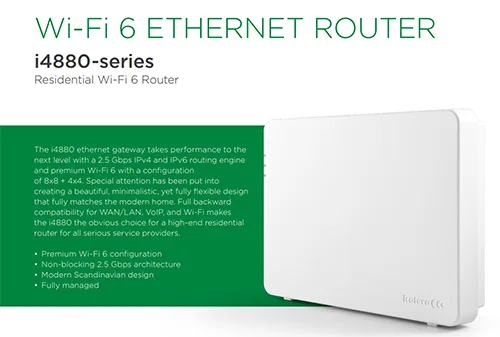
Rise Fibre supplies an Icotera router with its broadband packages. The exact model depends on the selected speed, network and installation arrangement.
Some customers receive a Wi-Fi 5 Icotera router, while faster packages and newer installations can include Wi-Fi 6 equipment. Rise Fibre does not guarantee the same model across every Openreach, CityFibre and 4th Utility connection.
| Router feature | Rise Fibre details |
|---|---|
| Manufacturer | Icotera |
| Wi-Fi standard | Wi-Fi 5 or Wi-Fi 6, depending on the supplied model |
| Wireless bands | 2.4GHz and 5GHz |
| LAN ports | 1 × 2.5Gbps, 2 × 1Gbps |
| Antennas | 1 × 2.5Gbps, 2 × 1Gbps |
| WAN port | 2.5Gbps |
| Remote management | Included in supplied provider firmware |
| Guest Wi-Fi | Depends on the model and firmware |
| Bridge mode | Depends on the connection and firmware |
| Personal router use | Available on compatible connections after obtaining the required settings |
The single 2.5Gbps LAN port matters on the 2.3Gbps package. Only a device connected to that port with a 2.5Gbps adapter receives more than 1Gbps over Ethernet. The two 1Gbps ports cap at 1Gbps, and most laptops and desktops ship with 1Gbps Ethernet.
Wi-Fi limits speed before the line does. A Wi-Fi 6 phone or laptop with two antennas has a maximum link rate of 1,201Mbps on an 80MHz channel, and real transfers come in below that. Icotera’s 9.8Gbps figure combines all radios and is not the speed one device receives. Use Ethernet when testing a 500Mbps or faster package.
We found no Rise Fibre mesh add-on, so larger homes need a separate mesh or access point system. Customer reports on the router are mixed. A thinkbroadband user calls it flaky, and the listing notes that some customers upgrade their home networking to reach full speeds over Wi-Fi.
Real-world speed and latency evidence
Independent speed and latency measurements for Rise Fibre are limited, so we make no latency claim and do not publish a measured speed range. The evidence available:
- Every package is full fibre, so no copper section limits the line.
- A Trustpilot reviewer on a gigabit package reported Wi-Fi speeds slightly under 1Gbps.
- One thinkbroadband user reported slowdowns at peak times.
The two customer reports do not form a pattern. The transfer times below are our calculations from the package speeds.
Everyday use
We calculated transfer times at full line rate. Real transfers run slower because of protocol overhead, server limits and Wi-Fi. Times are rounded to the nearest minute.
| Package | 50GB game download | 10GB upload | 100GB cloud backup |
|---|---|---|---|
| Openreach 150Mbps (150/20) | 44 min | 1 h 7 min | 11 h 7 min |
| Openreach 500Mbps (500/70) | 13 min | 19 min | 3 h 10 min |
| Openreach 900Mbps (900/110) | 7 min | 12 min | 2 h 1 min |
| Symmetrical 500Mbps | 13 min | 3 min | 27 min |
| Symmetrical 1Gbps | 7 min | 1 min | 13 min |
| Symmetrical 2.3Gbps | 3 min | Under 1 min | 6 min |
The upload column separates the networks. A 100GB backup takes 2 hours on the Openreach 900Mbps package and 13 minutes on symmetrical 1Gbps.
Streaming: a 4K stream needs 15Mbps to 25Mbps, so four simultaneous streams need up to 100Mbps. Two group video calls add 6Mbps to 8Mbps of download. A four-person household uses up to 108Mbps at peak. A 150Mbps package covers that and leaves 42Mbps spare, which stretches a 50GB game download to 2 hours 39 minutes. On 500Mbps the same download takes 17 minutes.
Home working: two video calls use 6Mbps to 8Mbps of upload. The Openreach 150Mbps package has 20Mbps of upload, which leaves 12Mbps for file syncing while both calls run. Symmetrical packages have no such limit.
Gaming: online play uses little bandwidth and latency decides the experience. Game downloads depend on the platform’s servers as much as on your line, so a faster package does not always shorten them. Players who host servers or use port forwarding should confirm the connection has a public IPv4 address. One CityFibre reviewer reported a router WAN address in the 100.x range, which indicates shared addressing.
Choosing a package
| Household | Package | Reason |
|---|---|---|
| One or two people streaming, browsing and taking occasional calls | 150Mbps | Two 4K streams use up to 50Mbps and leave 100Mbps spare |
| Three to five people with several streams, gaming and calls | 300Mbps to 500Mbps | Peak use of 108Mbps leaves at least 192Mbps spare on 300Mbps |
| Home workers and creators with large uploads | Symmetrical 500Mbps to 1Gbps | A 100GB backup takes 27 minutes, against 3 hours 10 minutes on Openreach 500Mbps |
| Shared houses and wired PCs or NAS drives | 1Gbps | Matches the 1Gbps Ethernet ports on most devices |
| Homes with 2.5Gbps Ethernet devices | 2.3Gbps | Needs the router’s 2.5Gbps LAN port. Wi-Fi 6 devices cap well below it |
The cheaper package covers most homes. A faster package pays off for upload demand or several heavy users at once. The 2.3Gbps package delivers little extra to homes without 2.5Gbps devices.
Customer experience and support
Rise Fibre holds 4.6 out of 5 on Trustpilot from 7,451 reviews. 86% are five-star and 8% are one-star. Reviewers praise phone support, quick answers and smooth switching. Complaints centre on install scheduling, slower speeds than expected, long hold times, exit and equipment-return charges, and router support.
Two points qualify the score. Trustpilot shows a paid subscription on the profile and no recent history of the company inviting reviews. The score also reflects customers who chose Rise Fibre. TalkTalk customers moved across from August 2026 did not, and their experience will show in later reviews. ISPreview has noted that fast growth strains service quality at some providers.
Other sources match the pattern. GoCompare reports complaints about mid-contract rises, support delays and cancelling. The one-star reviews we read describe an unusable connection after repeated calls and charges after cancelling. They vary case by case.
Reliability
We found no published outage history or service-status record for Rise Fibre, so we give no reliability rating. Faults on the physical line fall to the network owner, Openreach or CityFibre, with Rise Fibre as the customer’s point of contact. One customer reported a two-day outage caused by vandalism that affected several providers, and praised Rise Fibre’s email updates during it. That is a wider-network incident.
Contract terms and exit costs
| Term | Detail |
|---|---|
| Contract lengths | 24 months, 12 months and 30 days |
| Introductory price | First 4 months of current 24-month deals |
| Set-up cost | £0 on 24-month deals. £0 to £19.99 on short-term contracts |
| Short-term monthly price | £29 to £54 across 12-month and 30-day packages |
| Early termination charge | Applies before the commitment period ends. Amounts are on Rise Fibre’s pricing page |
| Router | Included. Return is free on cancellation |
| Social tariff | £13.99 for an average 30Mbps download speed, listed under the 4th Utility name |
The March rise is a fixed amount stated at order, so it gives no penalty-free exit under Ofcom’s rules. Rise Fibre’s terms let you cancel without exit charges, by phone within 30 days of its email, when it changes your agreement in a way that disadvantages you.
Installation and switching
Homes with a full fibre line already installed activate remotely. Connect the supplied router on the activation date. Other homes need an engineer visit, which requires the owner’s or landlord’s permission. Reviewers describe quick installs, with scheduling delays as the most frequent complaint.
Rise Fibre handles the switch under One Touch Switch, so you do not contact your old provider. Early termination charges on the old contract still apply. The approximately 120,000 TalkTalk customers moved from August 2026 are mostly on CityFibre, and both providers contact affected customers.
Comparison with other providers
At an Openreach address, the 900Mbps package competes with BT, EE, Plusnet and Vodafone. We calculated 24-month costs for the same 1 October 2026 order, using each provider’s own rise date.
| Package | Average upload | Price | Total cost & reward |
|---|---|---|---|
| Rise Fibre 900Mbps Icotera Wi-Fi 6 router | 110Mbps | £27.99 for 4 months Annual rise: £4 |
Set-up:
£0
Reward:
None listed
Before reward:
£975.76
After reward: £975.76
|
| BT Full Fibre 900 Smart Hub 2 | 110Mbps | £32.99 Annual rise: £4 |
Set-up:
£0
Reward:
£145 BT Reward Card
Before reward:
£887.76
After reward: £742.76
|
| EE Full Fibre 900 Smart Hub 7 Plus | 110Mbps | £26.99 Annual rise: £4 |
Set-up:
£10
Reward:
£120 Reward Card
Before reward:
£753.76
After reward: £633.76
|
| Plusnet Full Fibre 900 Hub Two | 115Mbps | £26.99 Annual rise: £4 |
Set-up:
£9.99
Reward:
£155 Reward Card
Before reward:
£753.75
After reward: £598.75
|
| Vodafone Full Fibre 910 Wi-Fi 6 Power Hub | 105Mbps | £26.00 Annual rise: £3 |
Set-up:
£0
Reward:
£130 voucher
Before reward:
£708.00
After reward: £578.00
|
Rise Fibre’s Openreach 900Mbps package costs more than all four rivals over 24 months, before and after rewards. BT, EE and Plusnet use the Openreach network and match its average upload speed. Rise Fibre’s advantages are no set-up cost, 12-month and 30-day contract options, and symmetrical packages at CityFibre addresses that BT, EE and Plusnet do not offer on their Openreach packages.
Fixed-price providers avoid annual rises altogether. Four from a September 2026 roundup:
| Provider | Speed & contract | Price & notes |
|---|---|---|
| giffgaff | 200Mbps to 900Mbps 24-month contract | £25 to £32 a month |
| Rebel Internet | 109Mbps to 1Gbps 1, 12 and 24-month contracts | £34 to £48 a month Static IP: £2.50 a month |
| toob | 150Mbps to 2.3Gbps 1, 12 and 24-month contracts | £18 to £39 a month Offers speeds up to 2.3Gbps |
| YouFibre | 200Mbps to 7Gbps 24-month contract | £20 to £50 a month |
Verdict
Rise Fibre is suitable for homes on the CityFibre, 4th Utility or Community Fibre networks. Symmetrical speeds, lower listed prices than its Openreach packages and a 4.6 Trustpilot rating support that. The 12-month and 30-day contracts suit renters and anyone avoiding a long commitment.
Households that stream, browse and take video calls need no more than 150Mbps to 300Mbps. A 150Mbps connection covers four 4K streams and two calls with 42Mbps spare.
Home workers, creators and shared houses benefit from symmetrical 500Mbps or 1Gbps, where a 100GB backup takes under half an hour. The 2.3Gbps package benefits only homes with 2.5Gbps Ethernet devices.
Customers at Openreach addresses who want 900Mbps get a lower 24-month cost from BT, EE, Plusnet or Vodafone. Customers who want no annual rise should compare fixed-price providers. Customers who host servers or need port forwarding should confirm their IP arrangement before ordering.
FAQs
Does Rise Fibre increase its prices during the contract?
Yes. The price rises every March by the fixed amount shown in the at-a-glance table.
Does Rise Fibre need a landline?
No. Every package is full fibre and needs no phone line.
Does Rise Fibre use the Openreach network?
At some addresses, yes. It also uses CityFibre and 4th Utility.
Does Rise Fibre offer symmetrical speeds?
Yes on CityFibre, 4th Utility and Community Fibre. Openreach packages have lower upload speeds.
Is the 2.3Gbps package available everywhere?
No. It is available at selected CityFibre premises.
Can you leave Rise Fibre without paying an exit charge?
Not during the commitment period, unless Rise Fibre changes your agreement to your disadvantage. Exit charges apply otherwise.