Summary
- Freely has added CNN Headlines and will bring six more Warner Bros. Discovery channels to its free broadband TV platform.
- TLC will move from pay TV to free-to-air in January 2026 and will then appear on Freely alongside Quest, Quest Red, Food Network, DMAX and Really.
- The updates take Freely to more than 70 live channels over Wi-Fi, plus tens of thousands of hours of on-demand shows and films.
- Freely is backed by the BBC, ITV, Channel 4 and Channel 5 and streams live TV over broadband instead of relying only on an aerial or satellite dish.
- The service is built into a growing list of smart TVs and plug-in boxes, making it a stronger free alternative to pay TV for broadband households.
Freely, the broadband-based free TV platform backed by the UK’s main public service broadcasters, is expanding again. The service has switched on a new CNN news channel and agreed a deal to add six Warner Bros. Discovery entertainment channels, including TLC, to its streaming guide from early 2026.
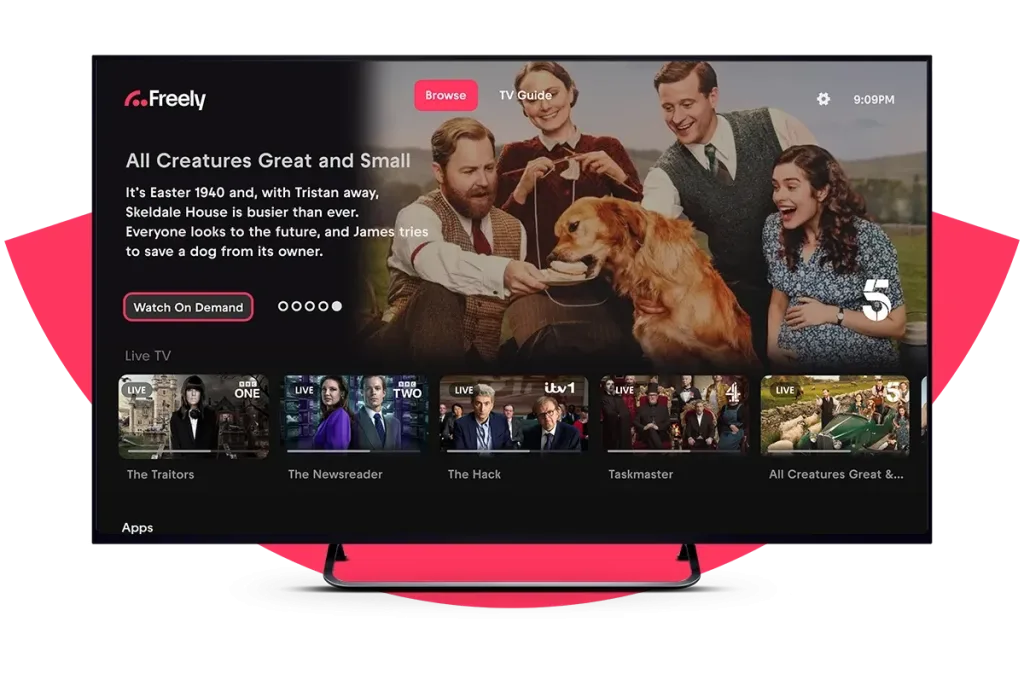
The changes push Freely further towards its goal of being the main free TV service for households that rely on broadband instead of a traditional aerial or satellite dish, with more channels and genres available without a monthly TV subscription.
New channels on Freely
The latest update brings seven extra channels to Freely through partnerships with CNN and Warner Bros. Discovery UK & Ireland. One of those services, CNN Headlines, is already available, with the remaining channels due to arrive during 2026.
Once everything is live, Freely will offer more than 70 live channels streamed over Wi-Fi, alongside a large on-demand section that bundles catch-up apps and box sets from the main broadcasters. Everyone TV, the company behind Freely, has also flagged that more channels are planned for 2026.
For viewers, this means a bigger mix of news, factual, lifestyle and reality shows delivered over their broadband connection, without tying them into a pay TV contract.
CNN Headlines joins the guide
CNN Headlines is the first part of the deal to go live. It appears on Freely as channel 305 and focuses on short news updates rather than long bulletins.
The channel offers rolling coverage of international news, business stories and sport, broken into brief segments that viewers can drop in and out of. It gives Freely users a dedicated global news source to sit alongside UK news from the BBC, ITV and other public service broadcasters.
For anyone who wants an international perspective but is trying to move away from pay TV bundles such as Sky or Virgin Media, this is a helpful addition to the free channel list.
Warner Bros. Discovery entertainment channels
From early 2026, Freely will also start streaming six Warner Bros. Discovery channels: Quest, Quest Red, Food Network, DMAX, Really and TLC.
These are all linear entertainment channels that already have a presence on traditional Freeview and satellite platforms. They focus on factual shows, lifestyle content, crime, reality and home improvement, so they add more depth to Freely’s entertainment and documentary catalogue.
TLC is the standout change. It is due to move from pay TV to free-to-air in January 2026. Once that happens, its mix of reality and entertainment shows will be available on services such as Freeview and Freely without a subscription. For viewers who have been used to seeing TLC inside paid bundles, this marks a clear shift towards more premium-style content being funded by advertising on free platforms instead.
Freely’s expanding free TV offer
Taken together, these moves make Freely more competitive as a free streaming service. With over 70 live channels and more than 75,000 hours of on-demand content promised, the platform is starting to look less like a basic electronic programme guide and more like a full TV environment in its own right.
Freely already brings together channels and on-demand players from the BBC, ITV, Channel 4 and Channel 5, alongside smaller broadcasters and thematic channels. Adding international news from CNN and more factual and lifestyle shows from Warner Bros. Discovery helps the service cover more interests without asking viewers to pay a separate TV subscription.
Everyone TV has also said that further expansion is on the way in 2026, so this is likely to be one step in a longer shift rather than a one-off upgrade.
How Freely works over broadband
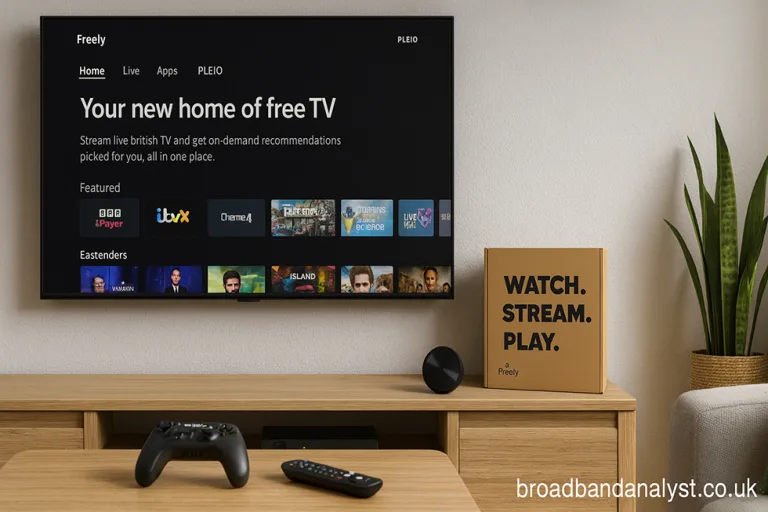
Freely is designed as a free television platform that streams live channels and on-demand shows over broadband. Instead of relying only on an aerial or satellite dish, it uses your internet connection to deliver many of the channels straight into the TV.
The platform is run by Everyone TV, which also manages Freeview and Freesat. Everyone TV is jointly owned by the BBC, ITV, Channel 4 and Channel 5. Freely is an evolution of the traditional free TV model, keeping the idea of a free electronic programme guide but moving more of the delivery onto IP (internet protocol).
On many compatible TVs, Freely can blend streaming channels with broadcast channels from a rooftop aerial, so viewers see a single guide even though the channels use different delivery methods. On devices that do not have an aerial connection, Freely works as a streaming-only service.
Unlike pay TV products such as Sky Stream or Virgin Media Stream, Freely itself does not charge a monthly subscription. You still need to pay for a TV Licence and for your broadband connection, but there is no extra platform fee to watch the channels.
Devices that support Freely
To access Freely you need a compatible device. At the moment, the service is built into a growing range of new smart TVs from brands including Hisense, Bush, Toshiba, Panasonic, JVC, Sharp, TCL, Amazon Fire TV sets and METZ.
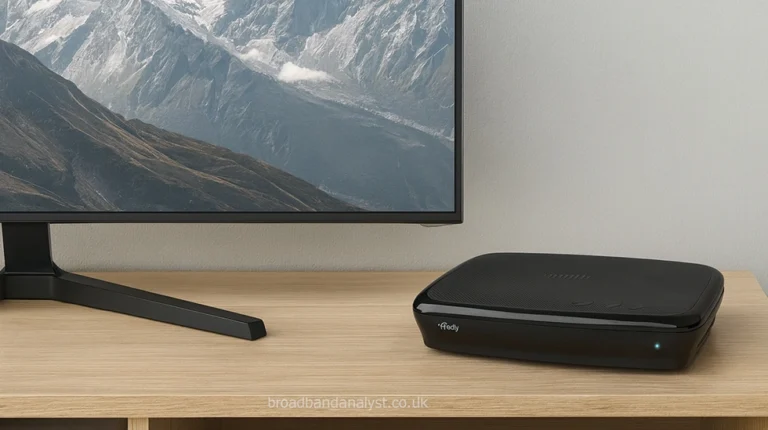
For households that do not want to replace their TV, Everyone TV and its partners have started to roll out plug-in devices. These include a new Humax Freely box and the PLEIO box from Netgem TV. Both connect to your existing television over HDMI and to your home router over Wi-Fi or Ethernet, adding the Freely guide and apps to an older screen.
Some broadband providers have already started to bundle these boxes with certain fibre packages, so upgrades may be offered as part of a wider broadband renewal rather than a separate purchase. Early demand has been strong enough that some devices have sold out at times, which suggests real interest in free broadband TV from households that are rethinking pay TV.
Broadband and running costs
Freely does not charge a subscription fee, but it does rely on a decent broadband connection. A single HD stream usually needs at least 5–10Mbps download speed, and homes that want to watch multiple channels or stream in 4K will benefit from faster fibre or cable packages.
If your broadband is reliable and your Wi-Fi coverage reaches the main TV, Freely should stream consistently. On weaker connections you are more likely to see buffering or drops in picture quality, especially at busy times in the evening.
In terms of costs, you still need to pay for your internet package and a TV Licence where required, but you do not pay Freely itself every month. The extra channels coming from CNN and Warner Bros. Discovery are free-to-view, funded by advertising rather than subscription charges.
Impact on Freeview and pay TV
The Freely expansion underlines a wider change in how UK households watch free television. Freeview currently relies on digital terrestrial transmitters and an aerial, while Freesat uses satellites and a dish. Those platforms are still widely used, but more broadcasters and regulators are now planning for a future where a growing share of viewing is delivered over broadband.
By adding more channels, especially ones that used to be associated with pay TV, Freely becomes more attractive to anyone considering cancelling a pay TV bundle. It also gives households an alternative route into free TV if they cannot install a dish or do not have a good terrestrial signal.
For pay TV providers, the risk is that some customers who mainly watch free-to-air channels could switch to a combination of broadband plus Freely and subscription streaming apps, instead of keeping traditional TV bundles. At the same time, premium sport and film channels still sit squarely in the pay TV world, so many fans are likely to stay with Sky, Virgin Media or standalone sport streaming services for now.
Why this matters for broadband customers
For UK broadband customers, this announcement is another sign that the value of a good internet connection now goes beyond web browsing and on-demand streaming. Freely turns that connection into the main route for live free TV as well.
Households that already pay for fibre or cable broadband can use Freely to add more channels without paying a separate TV subscription, as long as they have a compatible TV or plug-in box. The addition of CNN Headlines, Quest, TLC and the other Warner Bros. Discovery channels strengthens the offer for anyone who wants more choice but is watching their monthly bills.
As more free channels move to broadband delivery, and as Freely continues to grow, broadband quality and in-home Wi-Fi coverage will matter even more. For many homes, the decision about whether to upgrade to full fibre will be influenced not just by download speeds for work and streaming, but also by how they want to watch live TV in the years ahead.