Summary
- CityFibre has finished upgrading its full fibre network to 10Gbps-capable XGS-PON, enabling multi-gigabit wholesale products up to 5.5Gbps.
- The operator plans to roll out 50G-PON first for business connections by 2032, with residential upgrades expected to follow in the 2030s.
- CityFibre is already exploring a future shift to 100G-PON in the mid-2030s, helped by shared chipset and optics evolution between 50G and 100G technologies.
- These upgrades are designed to add capacity and efficiency, allowing the network to support more customers and faster packages on each fibre port.
- Only a handful of UK operators have trialled or deployed 50G-PON so far, with CityFibre likely to use York as a key testbed city.
- ISPs will need to invest in extra backhaul, new optical modems and routers, and engineer visits to exploit 50Gbps and above, while CityFibre focuses on maximising its current XGS-PON platform.
CityFibre’s Chief Technology Officer, David Tomalin, has sketched out how the company plans to move its full fibre network beyond today’s 10Gbps platform, and towards 50Gbps and eventually 100Gbps services over the next decade.
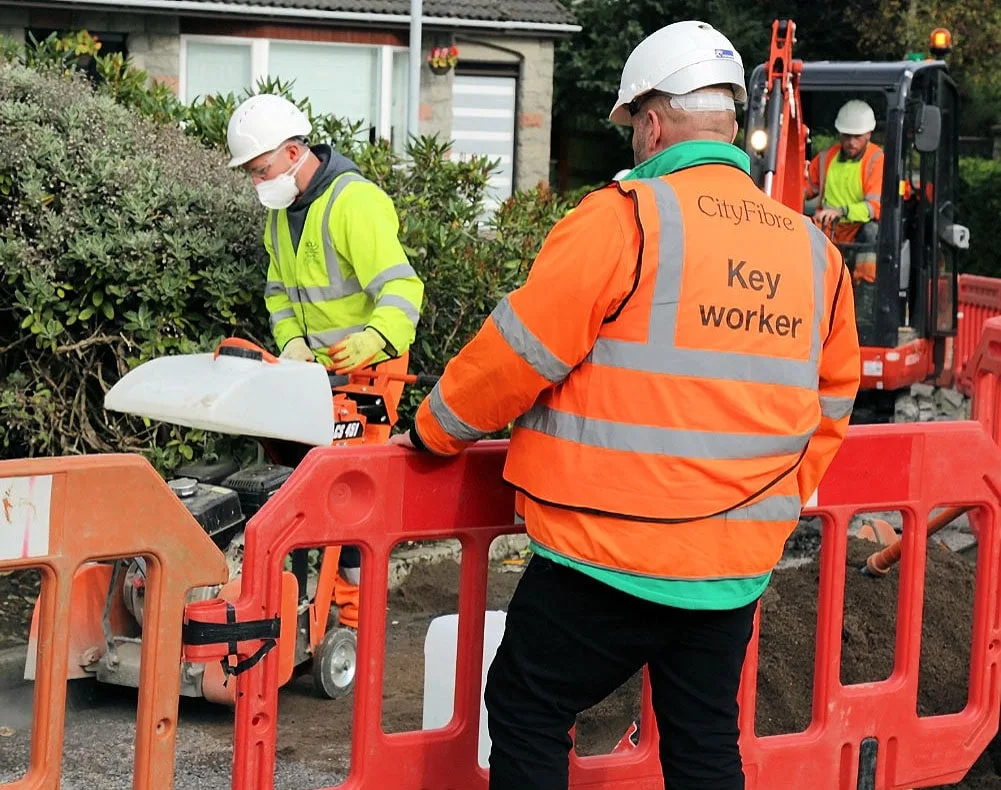
The update gives us a rare long-term view of where one of the UK’s biggest alternative networks wants to take its technology, and what that might mean for business users, home users and the ISPs that resell CityFibre capacity.
CityFibre’s existing fibre infrastructure
Right now, CityFibre has just finished a major upgrade programme, shifting its Fibre-to-the-Premises network from GPON to XGS-PON. That move gives each fibre port a potential 10Gbps of symmetric capacity to share between customers.
On the back of this, CityFibre has launched a wholesale 5.5Gbps product which partners such as Sky Broadband can package into retail multi-gigabit deals. Behind the scenes it is also serving hundreds of thousands of customers across millions of premises that are now ready for service.
Tomalin’s new comments are about what happens next, once the XGS-PON phase has bedded in and traffic levels start pushing that platform harder.
50G-PON as the next big step
CityFibre sees 50G-PON as its next major technology move. The rough timeline runs through to about 2032, although the company has not committed to specific launch dates.
The plan is to start with business connectivity. Larger firms and organisations are likely to be first in line for 50Gbps-capable services, both for raw bandwidth and for the extra capacity that comes from putting more on a single fibre port.
Residential customers are expected to follow during the 2030s, once CityFibre has proved the platform, refined its pricing and seen enough demand for faster connections at the consumer level.
Path from 50Gbps to 100Gbps
Tomalin has also talked about a future move to 100G-PON in the middle of the 2030s. The reason he can already see that step on the horizon is the way chipsets and optics are evolving.
There is a lot of shared engineering between 50G and 100G technologies. That gives CityFibre a clearer upgrade path: once the 50G kit is in place in its network, moving up to 100G-PON should be more straightforward than starting again from scratch with entirely different hardware.
That does not mean CityFibre has committed to a exact date for 100G-PON. However, it does show the company is thinking several product generations ahead, which matters for ISPs that need to plan their own long-term capacity.
Why 50G and 100G matter beyond pure speed
It is easy to see 50Gbps or 100Gbps as marketing numbers that most users will never fully use. Many homes still struggle to make use of 1Gbps, after all.
However, the real benefit for the network operator is capacity and efficiency. A higher-speed PON standard lets CityFibre:
- Serve more customers from the same port without congestion.
- Keep adding faster packages without constantly re-engineering links.
- Spread fixed costs, such as optical hardware and backhaul, across a larger pool of bandwidth.
That should help the network cope with more customers moving to multi-gigabit plans, streaming ever-higher resolution video, using cloud gaming and backing up huge photo and video libraries to cloud storage.
For end users, the shift to 50G-PON and 100G-PON is less about seeing a 50Gbps number on a speed test, and more about connections staying responsive when the household is hammering the connection from every room.
How CityFibre compares with other fibre operators
CityFibre is not the only UK operator looking at 50G-PON.
Netomnia is the only one to have deployed 50G-PON commercially so far, and even then only for a limited business-grade service. Openreach and ITS Technology have trialled 50G platforms and ITS may move to real deployments from 2026.
CityFibre usually uses York as its preferred location for early trials, so that is the city to watch for the first glimpses of 50G-PON on its network.
However, most of the UK’s full fibre providers are still in the phase of building coverage and selling 1Gbps and 2Gbps services. Multi-gigabit PON upgrades are a second-wave project that will grow in importance as more premises are live and take-up rises.
What this means for ISPs and their customers
The harder work may actually fall on the retail ISPs that resell CityFibre capacity.
If they want to offer 10Gbps, 25Gbps or even 50Gbps services on top of the new PON platforms, they will have to:
- Boost backhaul capacity into CityFibre’s network.
- Use new optical modems and routers that can cope with those speeds.
- Organise engineer visits to upgrade existing customers’ equipment.
All of this adds cost and complexity. That said, it also opens the door to more differentiated broadband products for businesses that need huge bandwidth and very low latency, and eventually for multi-device homes that want multi-gigabit services with plenty of extra capacity spare.
For now, most customers on CityFibre’s network will not notice any immediate change from the 50G-PON plan. They will continue to buy packages in the 150Mbps to multi-gigabit range, while the underlying network quietly gains extra capacity.
Focus remains on XGS-PON in the near term
Despite the long-term talk about 50Gbps and 100Gbps, CityFibre’s main job over the next few years is to squeeze everything it can from the XGS-PON platform it has just finished deploying.
That means:
- Getting more ISPs to launch services on its full fibre network.
- Encouraging partners to sell faster connections, including 5.5Gbps plans where there is demand.
- Keeping performance consistent as more customers sign up in each area.
As coverage matures and more homes can choose between several full fibre providers, raw speed will not be the only factor. Reliability, latency, customer experience and price will become the main battlegrounds.
CityFibre’s upgrade roadmap suggests it wants to be ready for that stage: a network with enough bandwidth and flexibility to support whatever retail products ISPs want to build on top, from today’s 1Gbps deals to tomorrow’s 50Gbps and beyond.