Summary
- SpaceX says it plans to start launching a second-generation batch of Starlink “Direct to Cell” satellites in 2027, with timing pointing to late in the year.
- A regulatory filing says SpaceX’s first-generation satellite-to-phone service launched with T-Mobile in July 2025 and has expanded to 22 countries.
- The same filing claims the Gen2 system could deliver “5G-like” connections, with more than 100 times the capacity and more than 20 times the speed capability of the first generation.
- In the UK, Virgin Media O2 has already announced O2 Satellite, with the first customer rollout expected in the first half of 2026.
- Starlink continues to offer separate dish-based satellite broadband in the UK, including a £55 per month residential plan offering up to 200Mbps download speeds.
SpaceX has signalled that it expects to begin deploying a “greatly enhanced” second-generation version of its Starlink Direct to Cell satellites in 2027, with the first launches likely towards the end of that year.
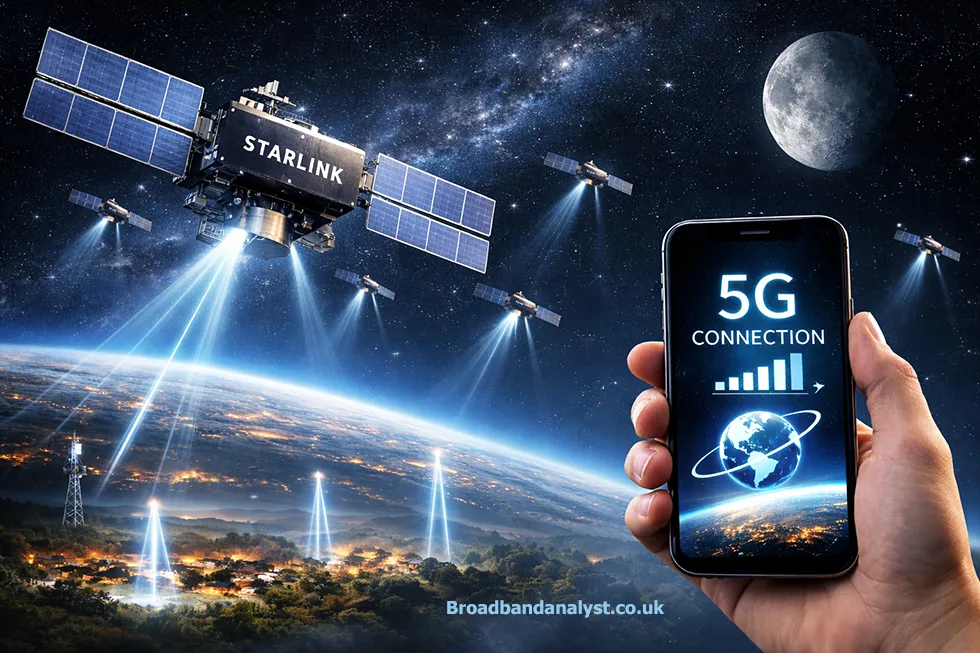
Direct to Cell is Starlink’s route to connecting standard smartphones straight to satellites, without customers needing a special handset or bolt-on accessory.
What Direct to Cell does today
The current Direct to Cell capability focuses on helping people stay connected when normal mobile coverage drops away. It is intended for essential communications and limited data use, rather than acting like a full replacement for ground-based 4G and 5G networks.
The model also leans on partnerships with mobile network operators, so the satellite link works as an extra layer when a phone cannot reach a nearby mast.
What SpaceX told regulators about the first-generation rollout
In a statement included in a recent FCC filing, SpaceX describes its first-generation “Supplemental Coverage from Space” service as already live and expanding quickly.
The filing says the service launched in the United States in July 2025 through a partnership with T-Mobile. SpaceX also states that the service has expanded to 22 countries, reaching areas with more than 400 million people, and that more than 6 million customers access it each month.
Gen2 claims: “5G-like” and far more bandwidth
SpaceX has not shared many detailed specifications for the Gen2 Direct to Cell satellites in the material referenced. Even so, the filing highlights the scale of the planned jump.
SpaceX claims the second-generation system will offer “5G-like” connectivity and deliver:
- more than 100 times the capacity of the first-generation direct-to-device constellation
- more than 20 times the speed capability of the current system
Those statements suggest a move beyond occasional messaging and limited data, towards wider app access and faster data performance, depending on how mobile partners choose to package and manage the service.
UK timeline: O2 Satellite comes first
UK customers are likely to see the earliest consumer-facing satellite-to-phone service via Virgin Media O2’s O2 Satellite plan. The operator has said the first rollout should arrive in the first half of 2026.
Based on what has been announced so far, the initial focus is messaging and data connectivity for situations where normal coverage is unavailable, with broader functionality expected later as the satellite network develops.
Starlink’s UK broadband offer remains separate
Direct to Cell is distinct from Starlink’s usual dish-based satellite broadband, which customers use at home or on the move with dedicated Starlink equipment.
In the UK, Starlink currently makes available residential plans including a £55 per month option that offers up to 200Mbps download speeds. Starlink also promotes a £35 per month residential option offering up to 100Mbps download speeds in selected areas, with availability varying by location and eligibility.
What remains unknown
SpaceX has shared a launch target and ambitious performance claims, but several practical details remain unclear ahead of 2027, including:
- which countries will get expanded capability first
- how quickly voice and broader data access will be introduced across different partner networks
- what user experience customers should expect in busy areas compared with remote locations
- how pricing will work once services move beyond basic messaging
For now, the key dates to watch are the UK operator rollouts during 2026 and the start of Gen2 satellite launches in 2027.