Summary
- Ofcom has fined Virgin Media £23.8 million for failing to protect vulnerable telecare customers during its move from analogue landlines to digital phone services between August 2022 and December 2023.
- The regulator found serious failures in how Virgin Media identified telecare users and in some cases disconnected them, leaving alarms unable to connect reliably to monitoring centres and emergency help.
- The penalty reflects the duration and seriousness of the issues and the potential harm to vulnerable customers; it includes a 30% reduction because Virgin Media self-reported incidents and accepted the breach.
- Virgin Media has paused and then reshaped its migration process, adding manual checks, extra contact with about 43,000 telecare customers, more in-home support and a new policy not to disconnect non-engaging telecare users.
- The case highlights wider risks as the UK retires copper landlines, and anyone using telecare on a landline is urged to speak to both their telecoms and telecare providers, check compatibility on digital services and test alarms after any switch.
Ofcom has fined Virgin Media £23.8 million for putting vulnerable telecare customers at risk during its move from analogue landlines to digital phone services. The investigation found that some customers who relied on alarms and monitoring systems were disconnected during the migration, leaving them without a reliable route to help in an emergency.
Ofcom’s penalty and what it is based on
Ofcom’s decision focuses on Virgin Media’s conduct between August 2022 and December 2023, when the company was moving landline customers onto digital phone services delivered over broadband. The regulator concluded that Virgin Media broke General Condition C5.2, which requires telecoms companies to have clear policies for dealing fairly and appropriately with customers in vulnerable circumstances – and to follow those policies.
In simple terms, Ofcom decided that Virgin Media’s written approach to vulnerability looked acceptable on paper, but the way it was applied during this migration was not good enough. The regulator pointed to failings that affected how telecare users were identified, recorded and treated, rather than a small number of isolated mistakes.
The £23.8 million fine has to be paid to HM Treasury within four weeks. Ofcom says the penalty level reflects several factors: the seriousness of the breaches, the length of time over which they occurred, the vulnerability of the customers involved and the potential for serious harm. The figure includes a 30% reduction because Virgin Media reported serious incidents to Ofcom itself, accepted the breach and cooperated with the investigation under a formal settlement process.
Ofcom also looked at related rules on uninterrupted access to emergency organisations and the content of vulnerability policies, but decided not to make additional formal findings on those areas in this case, focusing instead on the core duty to treat vulnerable customers properly.
Telecare, digital landlines and why this migration is sensitive
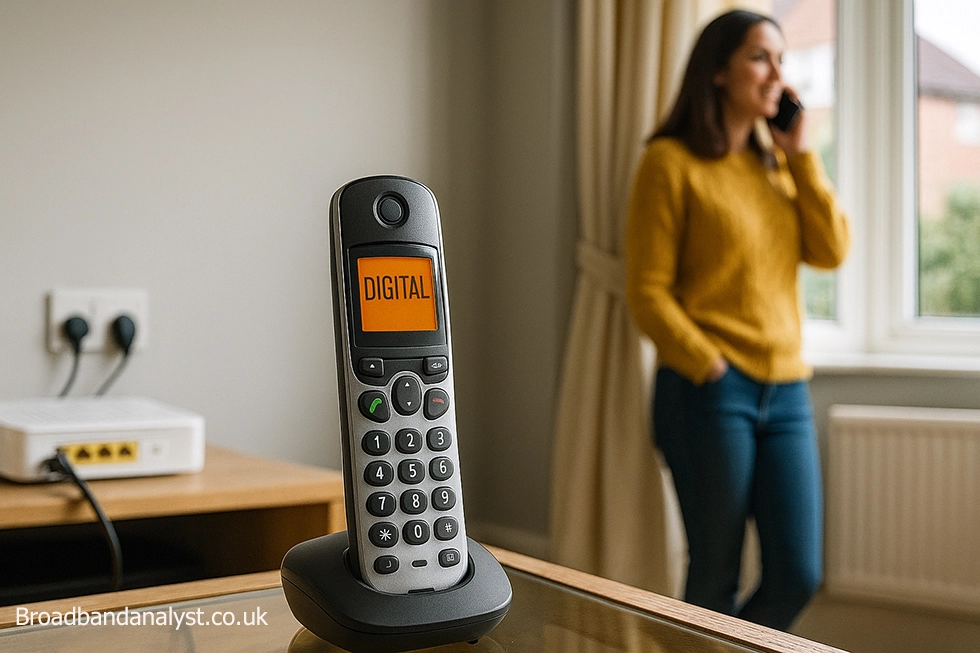
Telecare is a broad term for alarms and devices used mainly by older people, disabled people and others who may need help quickly at home. It includes pendant alarms, fall detectors, bed or chair sensors and other equipment that sends an alert over a landline to a monitoring centre or local authority team if something appears to be wrong.
For these systems to work, the phone connection has to be reliable. If the line stops working, or if the alarm cannot connect reliably once it has dialled out, the user may have no easy way to call for help during a fall, fire, gas leak or other emergency.
The backdrop here is the UK’s retirement of the public switched telephone network (PSTN) – the old copper-based landline system. That network is being withdrawn and replaced with digital phone services, usually delivered over full fibre or other broadband connections. The migration is due to be completed by the end of 2026 or early 2027, and millions of lines still need to be switched.
Moving to digital phone services matters because the old network is ageing, but it also creates new points of failure. Digital landlines often depend on mains power and a broadband router, and telecare devices that were designed for analogue lines may not behave consistently once connected to a digital service. That is why Ofcom and government have repeatedly told providers that telecare users need extra care, testing and in some cases new equipment when lines are moved.
What Ofcom says went wrong in Virgin Media’s migration process
Ofcom’s investigation found two core failures in how Virgin Media dealt with customers who used telecare.
First, Virgin Media did not reliably identify and record which of its customers were telecare users. The regulator found that the methodology used to flag telecare users in customer records was flawed and did not match Virgin Media’s own stated policy. There were gaps in the screening process, and that meant some customers who relied on telecare were treated like any other landline customer during the switchover rather than receiving extra support.
Second, the company’s approach to disconnecting customers caused particular concern. In cases where telecare customers did not respond to attempts to contact them about the migration, Virgin Media still proceeded with disconnections. Ofcom says Virgin Media made these decisions even though it was reasonably aware that telecare devices might stop connecting to alarm monitoring centres while services were cut off.
Taken together, these failings meant that some vulnerable customers were left at risk, with their alarms unable to reach monitoring centres if they pressed their pendant or triggered a sensor. Ofcom describes this as a systemic failure in how the company implemented its migration process, rather than a single error by an individual team.
Incidents, deaths and the road to a full investigation
The migration problems did not surface in isolation. In 2023, two separate deaths involving Virgin Media customers came to light, where pendant alarms reportedly failed after analogue lines were switched to digital services. These cases drew national attention and highlighted the dangers of moving telecare users without robust checks and coordination.
Virgin Media notified Ofcom in November and December 2023 about a series of serious incidents linked to the migration of telecare customers. Shortly afterwards, Ofcom opened a formal investigation into whether the company had broken its duties to treat vulnerable customers fairly and to maintain access to emergency services.
At roughly the same time, other providers were also facing questions about digital landline migration and telecare, with several pausing moves for vulnerable customers after reports of people being unable to call 999 during power cuts. That wider pressure led to an industry charter and a national telecare action plan, setting expectations for how telecoms companies, local authorities and telecare providers should work together during the switchover.
Ofcom’s latest decision closes this strand of enforcement against Virgin Media but leaves the wider PSTN switchover and vulnerability agenda very much live.
How Virgin Media says it has changed its approach
Virgin Media says that most customer migrations were completed without incident, but accepts that its approach to telecare customers was not good enough and needed to be fixed.
In response to the issues identified, Virgin Media paused its migration programme for telecare users in December 2023. During that pause, the company carried out manual reviews of its customer records to pick out additional telecare users who may not have been captured by earlier screening. It has contacted about 43,000 identified telecare customers as part of an “assurance” exercise, checking their situation and offering support with the move to digital services.
The company has also changed how it deals with non-responsive telecare customers. Rather than disconnecting users who never reply to letters, emails or calls, Virgin Media says it now keeps them in an ongoing engagement process, with repeated attempts to make contact and tailored support where possible. The intention is that no telecare user should be cut off simply because they did not respond to initial messages.
Virgin Media points to a wider package of measures too. It says it has improved its communications, offers more in-home support through technicians, and carries out more post-migration checks to confirm that services – including alarms – are working correctly. For customers who may be vulnerable during power cuts, it highlights the availability of backup units that include battery power to keep the phone service running for a limited period.
On the regulatory side, Virgin Media has signed the government’s PSTN charter and the checklist for non-voluntary migrations, which commit providers to follow specific safeguards when moving customers who may not be actively choosing to switch.
What the PSTN switch-off means for other providers
Although this case centres on Virgin Media, it is part of a wider story. Every major telecoms provider with legacy landline services needs to complete a similar migration to digital phone technology over the next couple of years. That includes providers that use the Openreach network and those that run their own full fibre infrastructure.
Ofcom has made it clear that companies must identify customers in vulnerable circumstances, including telecare users, and build their migration plans around those needs. That means extra contact attempts, clearer communication, closer coordination with telecare providers and local authorities, and more careful rules on when it is acceptable to disconnect a line.
Government guidance and the Telecare National Action Plan add another layer of expectation. Local authorities are being asked to audit telecare equipment, work with providers to test devices on digital lines, and ensure that people are not moved without a plan in place for their alarms and monitoring systems.
Other telecoms firms have already paused elements of their migration programmes in response to problems with power cuts and emergency calls. The Virgin Media fine is likely to reinforce the message that Ofcom is prepared to take formal action if it finds similar issues elsewhere.
What this means if you have telecare on a Virgin Media line
If you or a relative has a telecare pendant or alarm connected to a Virgin Media landline, this decision should mean you receive more, not less, attention during any digital switchover.
Virgin Media is expected to keep clearer records of who uses telecare, to contact those customers well before any change, and to avoid disconnecting services where there is a known safety risk. You should receive information explaining what the migration involves, what equipment may need to change, and how testing will be done to confirm that alarms still reach the monitoring centre once the line has moved.
The fine itself does not automatically trigger compensation for customers. However, anyone who believes they have been affected – for example, by a telecare alarm failing after a migration, or by being disconnected in error – can complain through Virgin Media’s normal complaints process. If they are not satisfied with the response, they may be able to escalate the case to the relevant alternative dispute resolution (ADR) scheme.
It is also worth remembering that some responsibilities sit with telecare providers and local authorities. Many older telecare units were designed for analogue lines and may need replacing or reconfiguring when landlines go digital. That equipment review is separate from your broadband or phone contract, but the organisations involved are expected to coordinate.
Practical steps if you rely on telecare or other landline-based devices
For anyone who uses telecare – whether with Virgin Media or another provider – there are some simple steps to reduce risk during the PSTN switchover:
- Contact your telecoms provider and make sure they know you are a telecare user. Ask them to record this on your account as a vulnerability marker.
- Contact your telecare provider, local authority or alarm company and ask whether your device has been tested with digital phone services. If it has not, ask what their plan is before your landline changes.
- When a migration date is set, ask to test your alarm with the monitoring centre after the switch – ideally while you are on the phone to them – so both sides can confirm that calls connect as expected.
- Ask your telecoms provider what happens during power cuts. Many now offer battery-backed units or hybrid solutions that use a mobile network for backup. Check how long this support lasts and whether it meets your needs.
- Consider keeping a charged mobile phone available as an extra route to emergency services if the landline or router loses power.
Similar issues can affect other equipment that still uses a landline, such as some burglar alarms, lift phones and door entry systems. If you have any of these, it is worth asking the provider of that system how they are preparing for the switch to digital lines.
What happens next with Ofcom and the switch to digital landlines
Ofcom plans to publish a non-confidential version of its full decision in due course, which should give extra detail on how it assessed Virgin Media’s conduct and how it calculated the fine. The regulator will continue to monitor Virgin Media’s progress on the commitments it has made and may revisit the company’s performance if further issues come to light.
More broadly, Ofcom is keeping the whole PSTN switchover under close review. It has already issued guidance on protecting access to emergency services, set expectations on support for vulnerable customers and asked providers for formal assurances about how they handle telecare users.
For consumers, the key message is that contact from your landline provider about a move to digital services should not be ignored – especially if you, or someone you care for, relies on telecare or any other landline-based safety system. The technology change is manageable, but only if the companies involved treat vulnerability as central to the process, not as an afterthought.